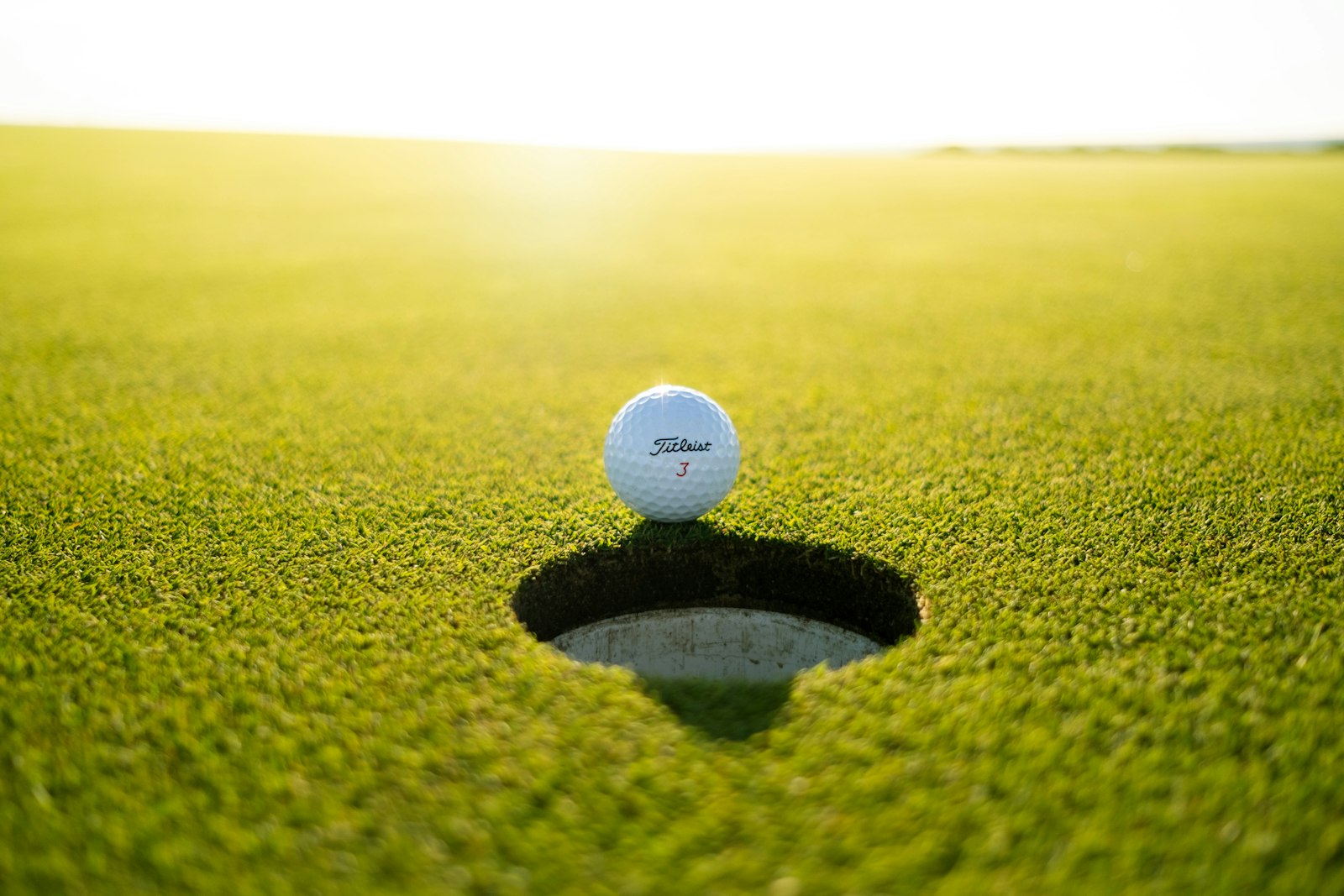
Pete Dye's masterpiece. Ranked among the world's greatest resort courses since 1971. Eight holes along the Caribbean Sea — jagged coral, ocean wind, and one of golf's most demanding and rewarding experiences.

Pete Dye arrived in the Dominican Republic in 1969 with a brief to build a world-class golf course at the newly planned Casa de Campo resort. What he created — using coral dredged from the Caribbean — became one of the most discussed and celebrated resort courses ever built.
The name "Teeth of the Dog" comes from the jagged coral limestone that Dye incorporated throughout the course, particularly on the ocean-facing holes. That coral defines the course's personality: beautiful, sharp, and demanding of precision.
Dye routed eight holes directly along the Caribbean Sea — not merely near it, but on it. The carries over coral and water are as dramatic as anything in golf. The remaining ten holes wind through the resort's lush interior, with enough elevation change and strategic variety to reward every club in the bag.
Golf Details at Villa Espada →Eight holes play directly along the Caribbean Sea. Here are the ones that define the Teeth of the Dog experience.
The first ocean hole. A par 4 that hugs the Caribbean coastline. The tee shot demands nerve — the ocean is not in play, but it dominates your peripheral vision and your decision-making.
Ocean HoleA short par 3 over Caribbean water to a green surrounded by the sea on three sides. Often photographed, rarely forgotten. Crosswinds make club selection more art than science.
Island Green · Par 3A long par 4 along the ocean bluff. The second shot requires threading to a narrow green with the sea hard right. One of the most demanding approach shots on the course.
Ocean · Par 4The par-5 closer on the front nine. An opportunity to collect birdies — but water left on the approach keeps risk firmly in play. A satisfying end to an extraordinary front nine.
Par 5 · Risk/RewardAnother ocean par 3 — this one with a larger carry over coral and sea. The green is elevated, the view is extraordinary, and the consequences of miscalculation are immediate.
Ocean Par 3A demanding par 4 that ends with an approach to a well-guarded green. The clubhouse looms behind — and the bar. One of the most satisfying finishes in Caribbean golf.
Finishing HoleTeeth of the Dog rewards the complete game. Length is an asset but rarely a deciding factor — Pete Dye built the course to expose weaknesses in every part of the bag. The ocean holes require aerial precision more than distance. The interior holes demand shape and trajectory control.
Single-digit handicappers will find a course that stretches them. Mid-handicappers (10–18) will find a fair, strategic challenge with clear reward lines. High handicappers should play forward tees — the course is enjoyable from every set of tees and the ocean views alone justify the round.
Wind is the variable. Trade winds off the Caribbean can add two to three clubs to approach shots and completely change the calculus of the par 3s. Local knowledge — which your butler arranges through the caddie program — is a genuine advantage.
Book a caddie. The local caddies at Teeth of the Dog have been reading the ocean winds on these holes for decades. Their green fee read and wind advice on the par 3s can save you three to four shots per round.
Consistently ranked among the top ten courses outside the United States — one of very few Caribbean courses to hold this designation.
Regularly ranked the number one resort course in the Caribbean and consistently in the top three of all Latin American golf courses.
One of a handful of Caribbean courses to be ranked in the top 100 courses in the world by Golf Magazine's panel of course raters.
A private villa with a butler who handles your tee times, two golf carts in the driveway, and member-rate green fees built into the booking. This is how serious golfers play Teeth of the Dog.